
Electrical Installation Condition Reports (EICR)
An Electrical Installation Condition Report (EICR) is a formal, in-depth assessment of the safety of an existing electrical installation. Carried out by a qualified electrician, it checks the wiring, consumer unit, sockets, and fixed equipment against the UK safety standard, BS 7671, and identifies any damage, deterioration, or non-compliance that could pose a risk
Legally required under the Electrical Safety Standards in the Private Rented Sector (England) Regulations 2020: at least every 5 years, or at the start of a new tenancy.
The Electricity at Work Regulations 1989 place a duty on employers to keep electrical systems safe. An EICR gives you evidence of compliance for insurers, landlords, or the HSE.
Not a legal requirement, but recommended for peace of mind, when buying or selling, or if the installation has never been tested.
These are guideline maximums — actual frequency depends on the age, condition, and use of the installation, which is why every report ends with a recommended date for the next inspection.
Any C1 or C2 marks the whole report Unsatisfactory. C3s alone don’t fail it, but we’ll always flag them.
Commercial / Industrial
Professional electrical services tailored to businesses, offices, retail units and industrial premises.
Renewables
Helping you reduce energy costs and future-proof your property with modern, energy-efficient technologies.
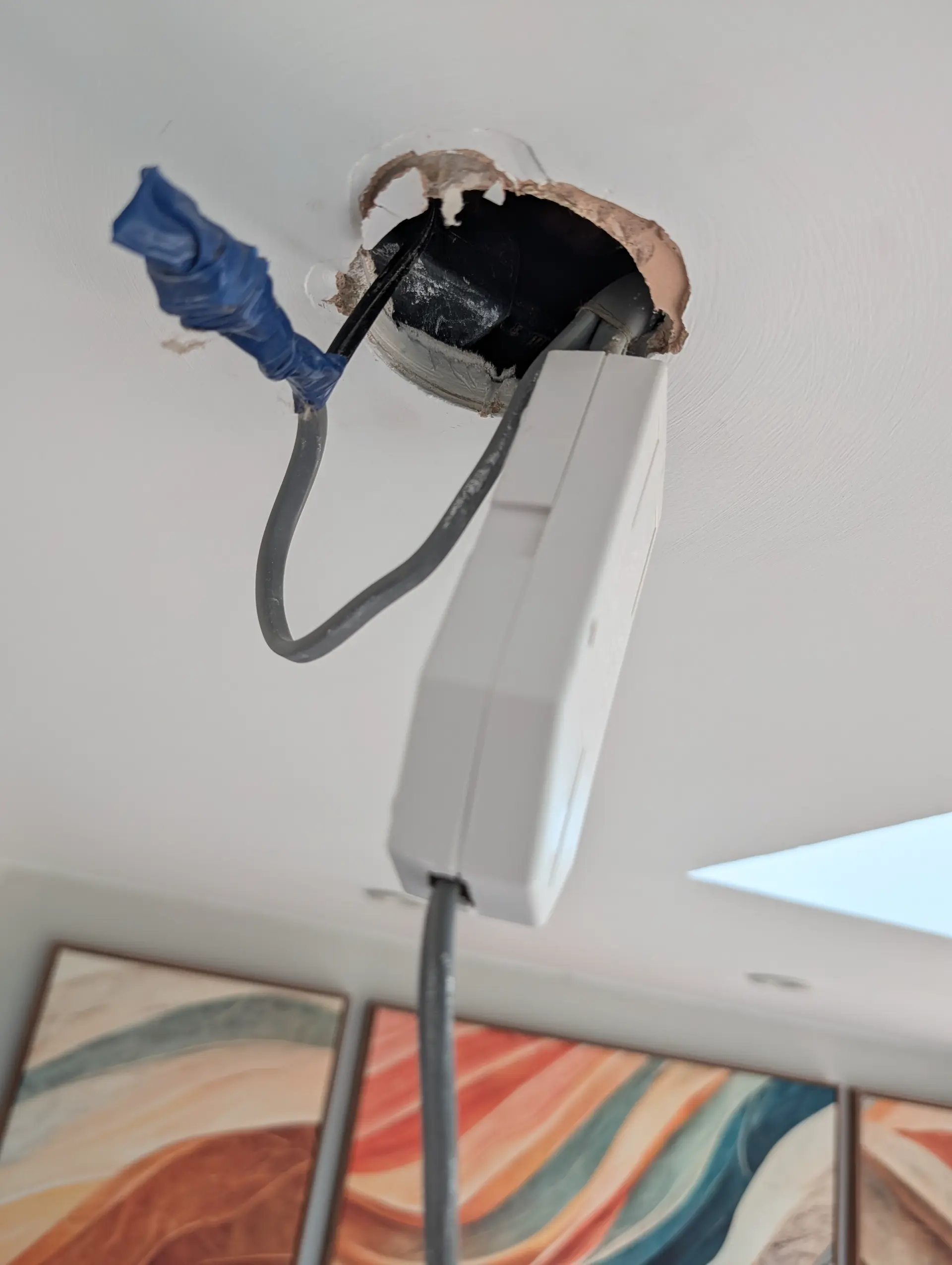
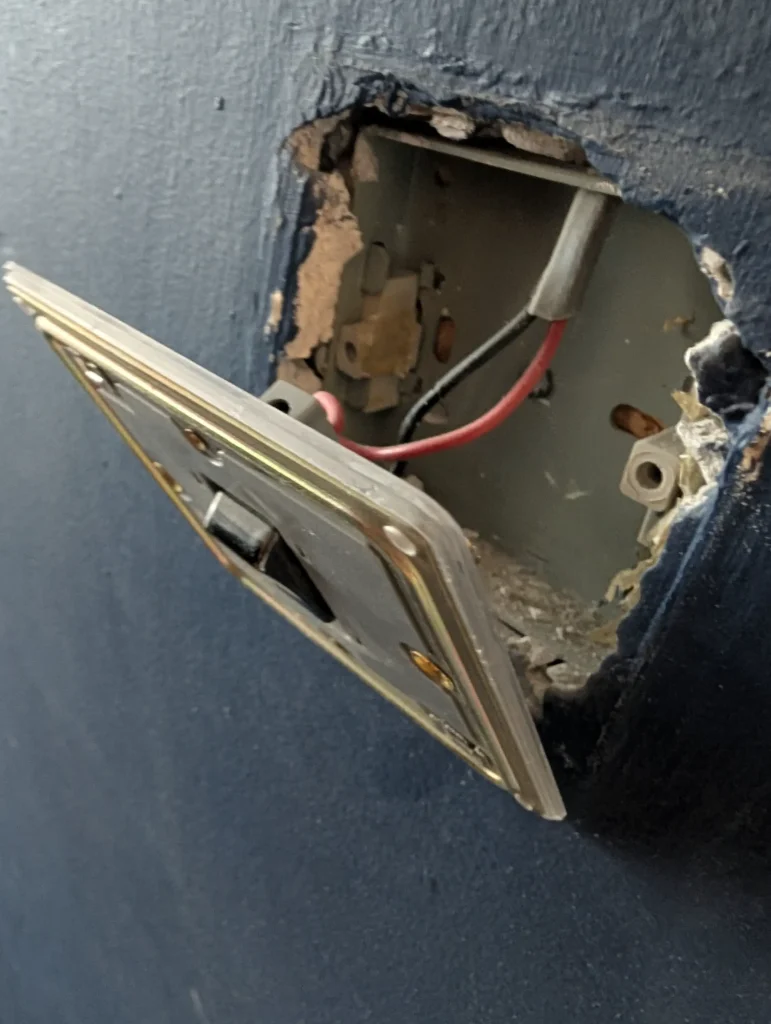
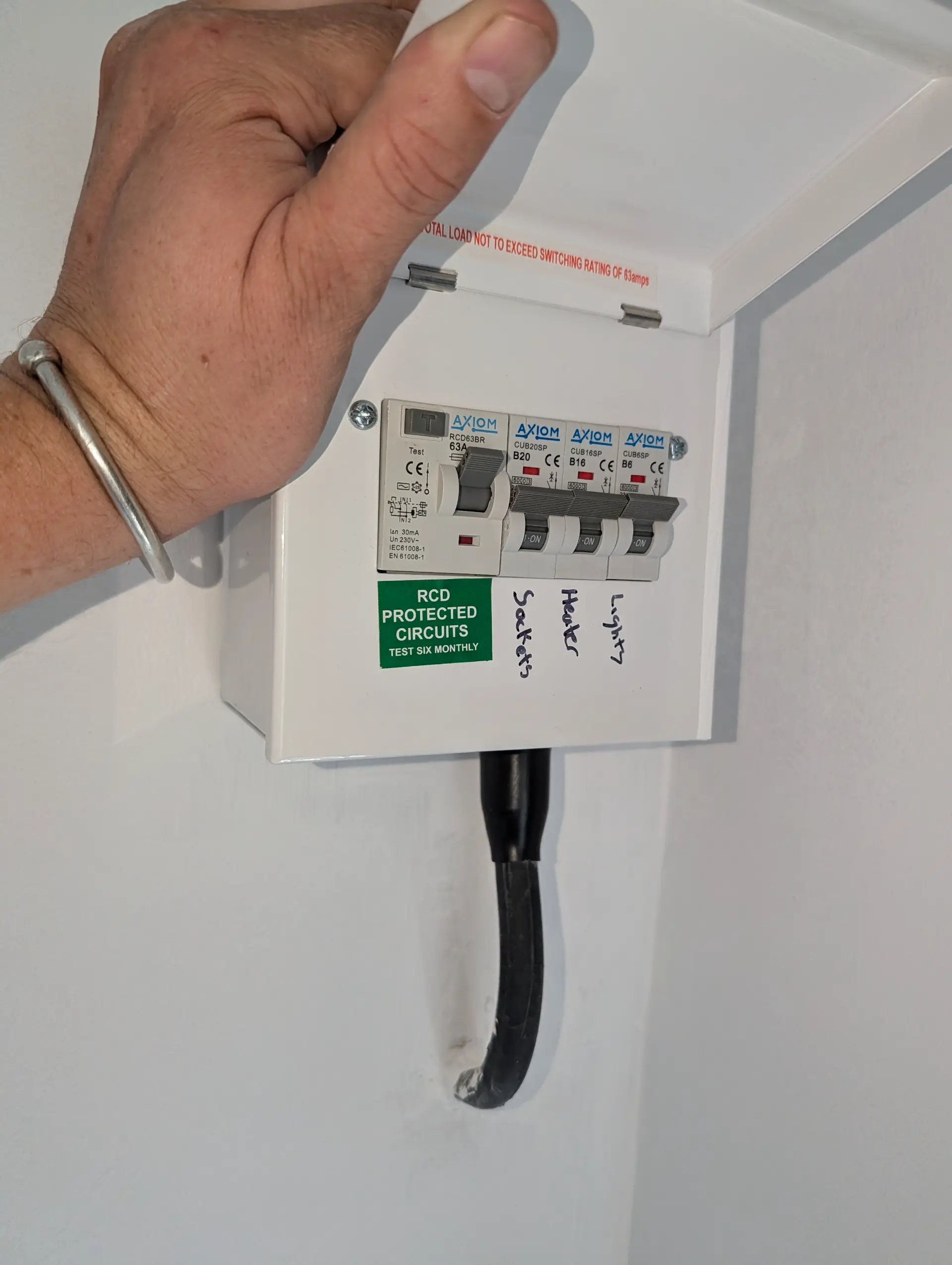
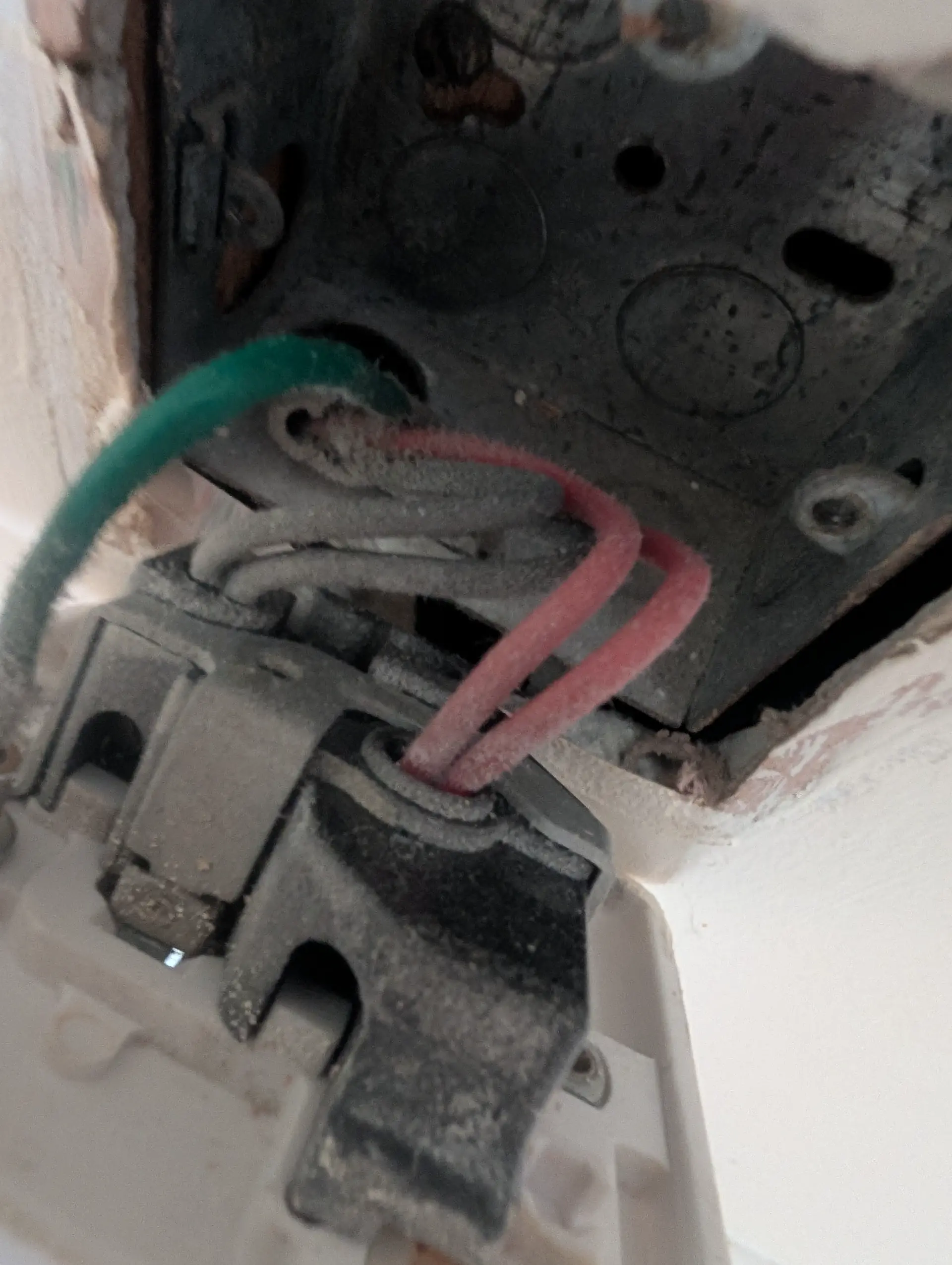
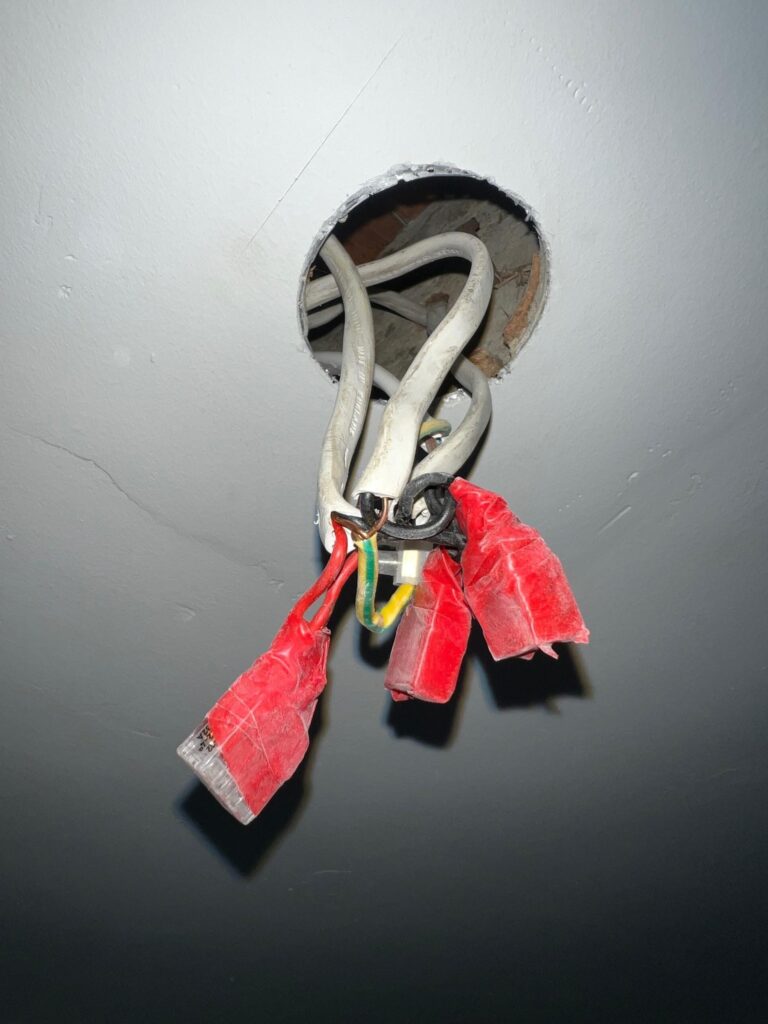
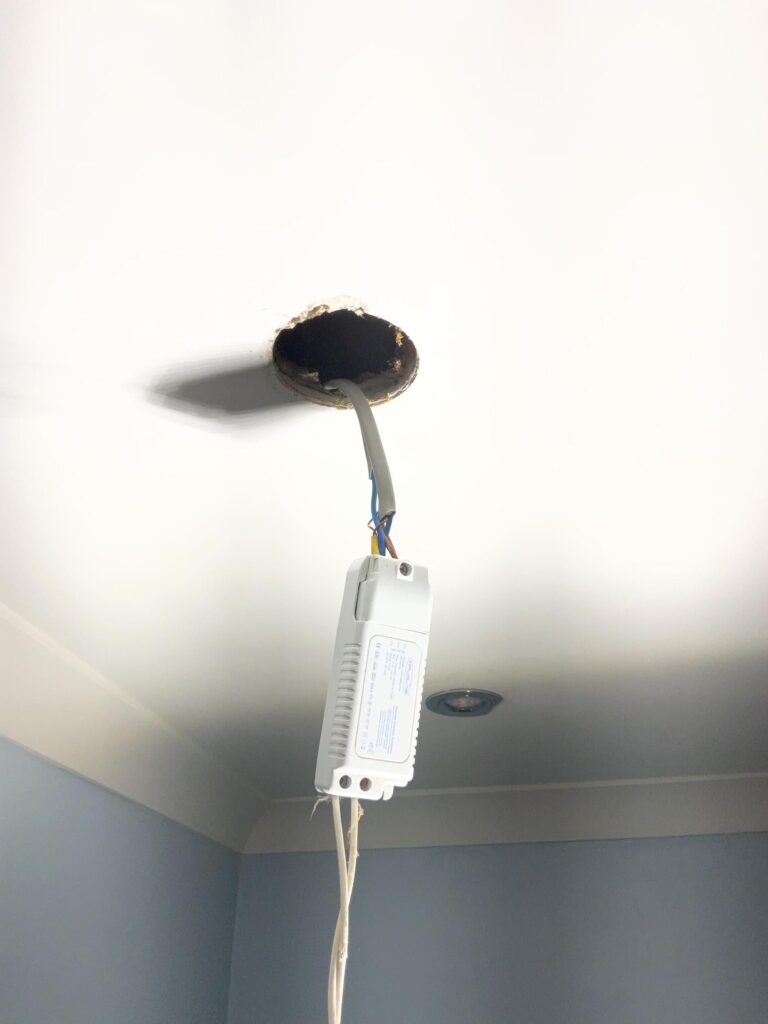
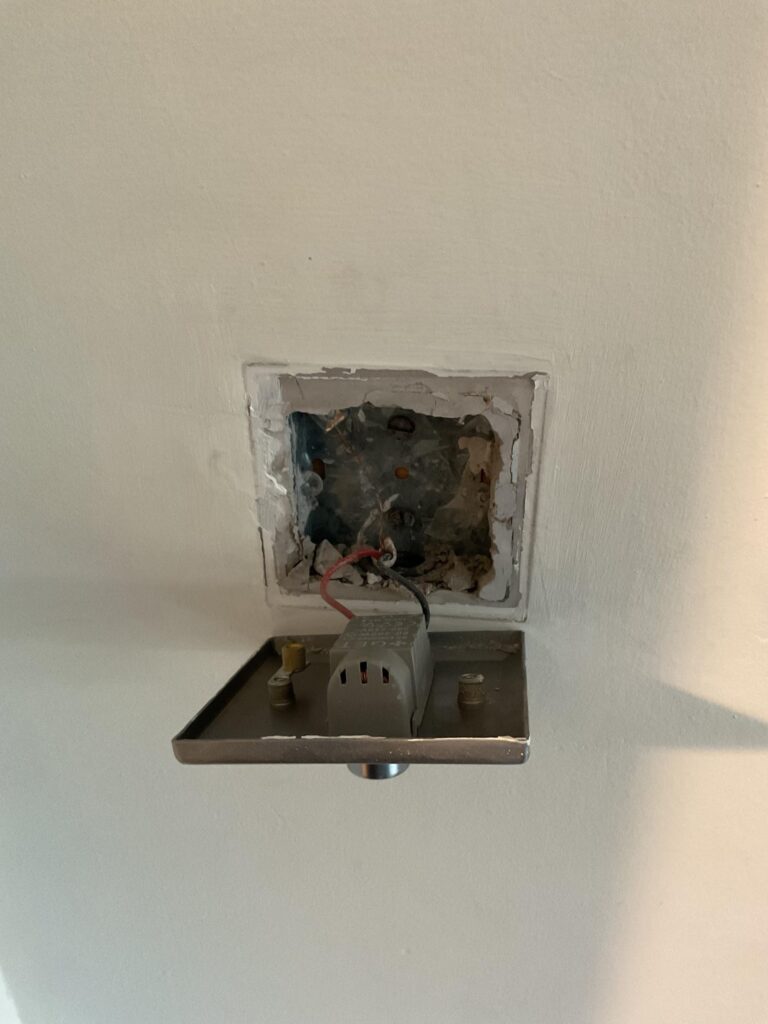
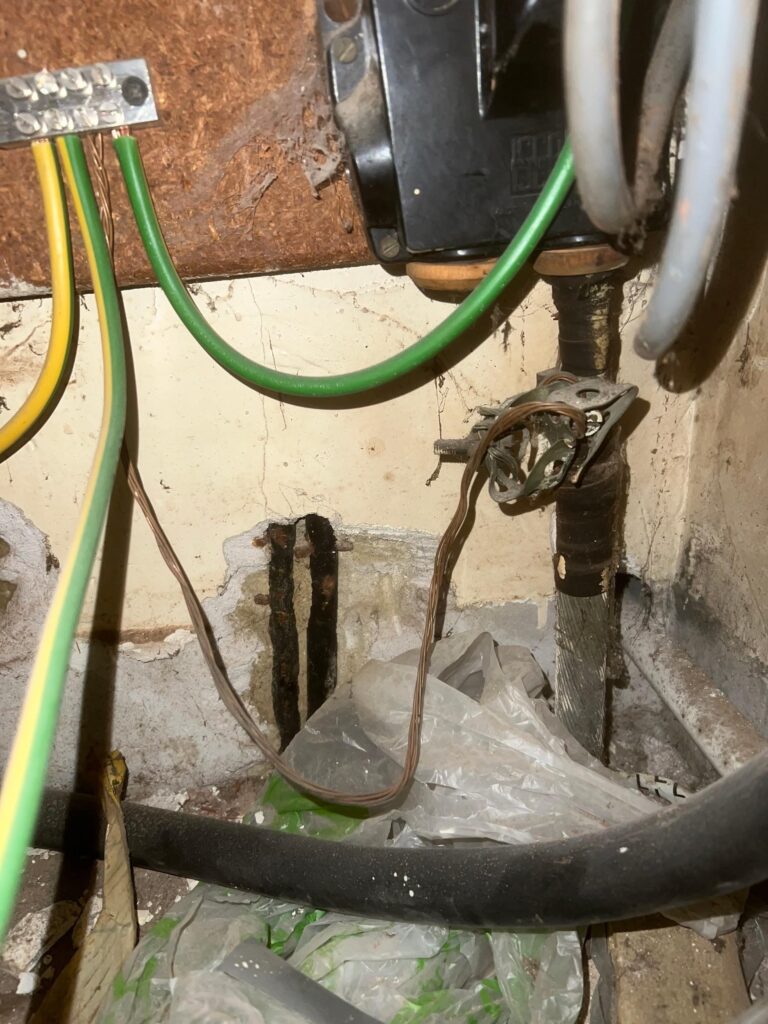
Here are examples of common electrical faults and non-compliances identified during EICR inspections.
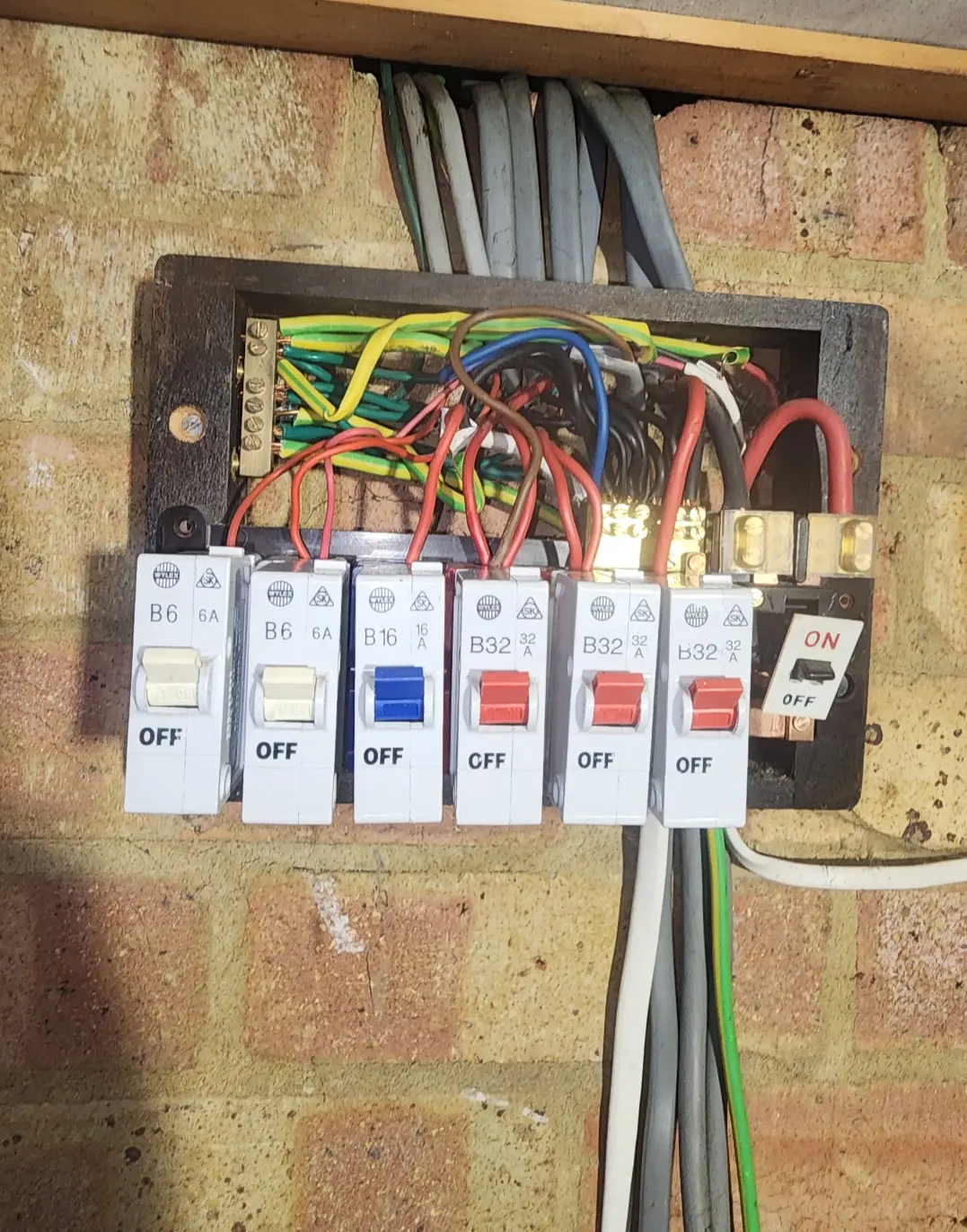
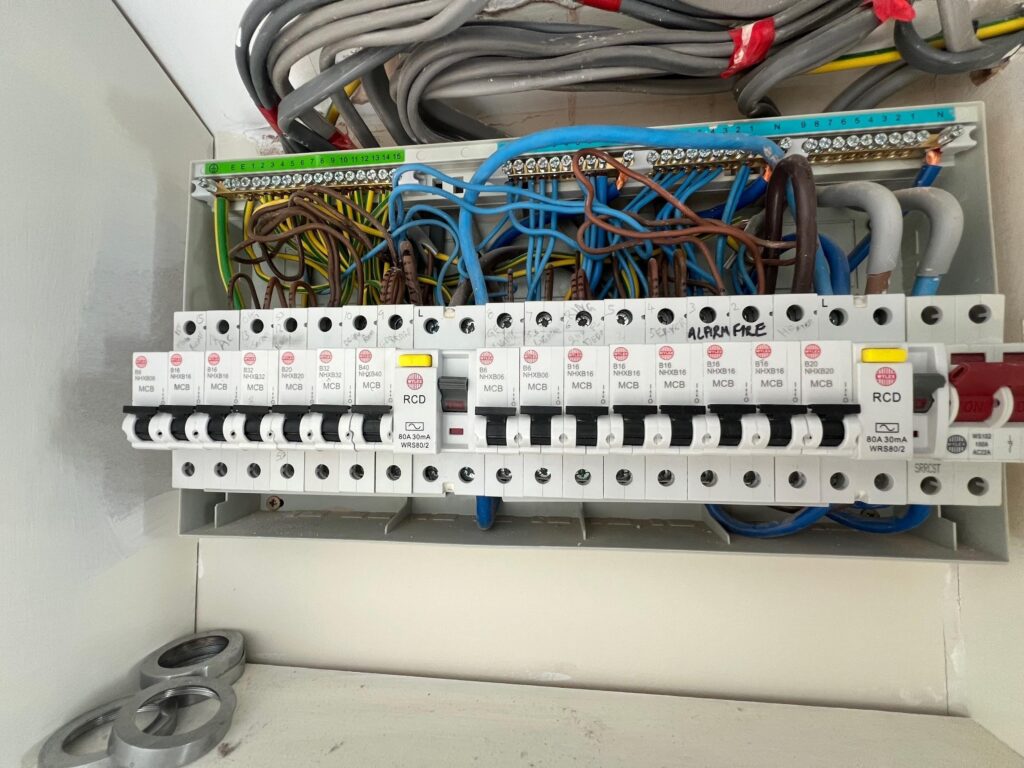
If you have an older consumer unit – in this case, a 1960s installation with a wooden, open-back construction – there can be several areas of non-compliance with current electrical standards.
Updating the consumer unit can address many of these issues. From this one picture alone, we can identify the following points, although this list is not exhaustive.
CODE 2 – No RCD protection for socket outlets supplying outside equipment, or for bathroom circuits where supplementary bonding is not in place.
CODE 3 – No RCD protection on other circuits where cables are installed less than 50 mm within the wall, including socket outlets that do not supply outside equipment.
CODE 3 – Incorrect or missing circuit identification, labelling and warning notices.
CODE 3 – No appropriate fire sealing where cables pass through walls.
CODE 3 – No surge protection installed.
CODE 3 – Undersized main supply tails.
CODE 3 – Cables are not arranged in the correct sequence.
CODE 3 – Cables below the consumer unit are inadequately supported.
CODE 3 – Consumer unit constructed from combustible material.
Replacing an older consumer unit with a modern, suitable unit can significantly improve the safety of the installation and help bring the consumer unit itself in line with current requirements.
However, the condition and compliance of the whole electrical installation should always be assessed, rather than assuming that replacing the consumer unit alone will resolve every issue.
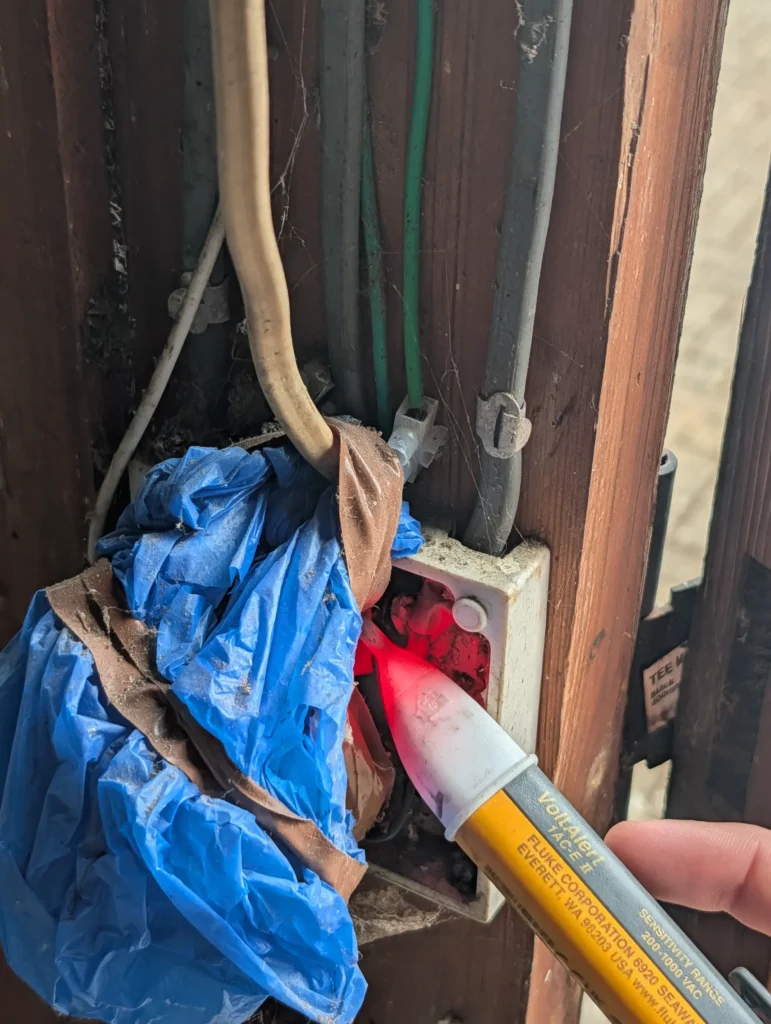
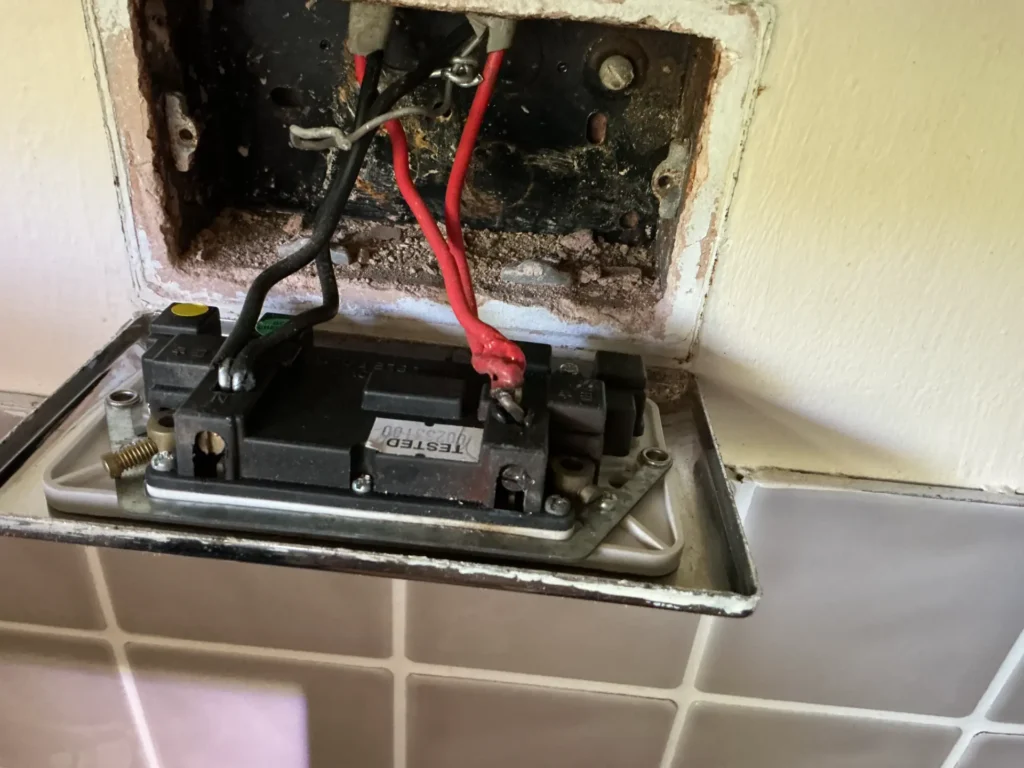
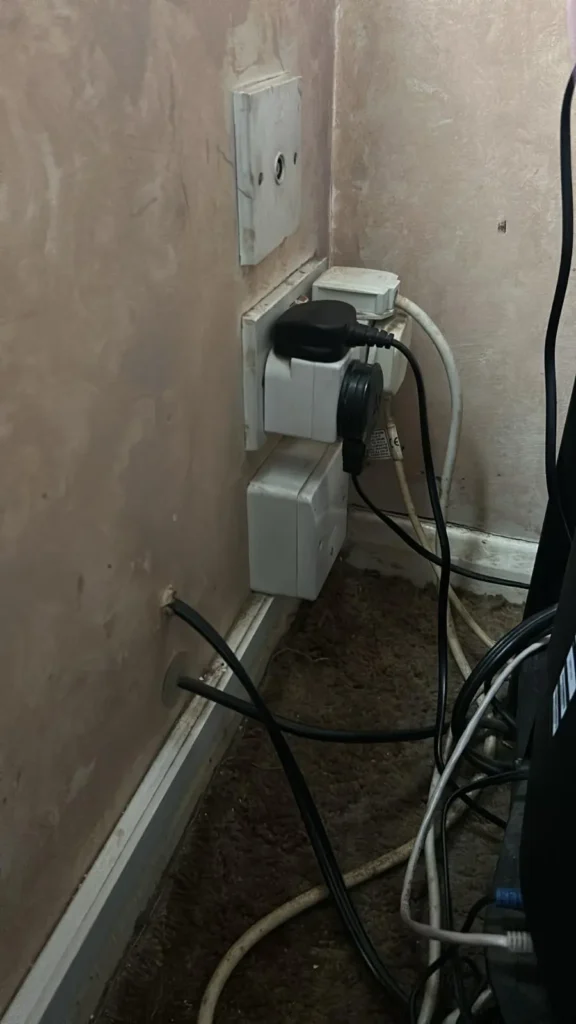
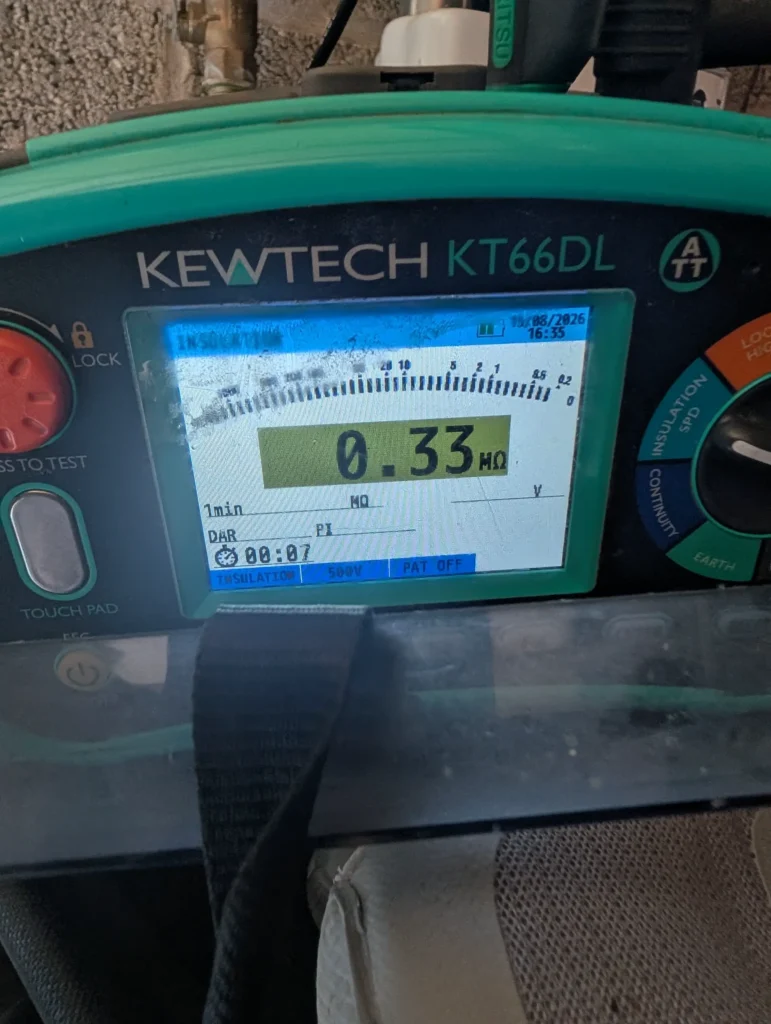
Many insurance policies now expect proof that a property’s electrical installation is safe and well maintained. Increasingly, insurers ask for a valid EICR at renewal or when a claim involving electrical damage or fire is made — and without one, a payout can be reduced or refused. A current EICR gives you documented evidence to protect your cover.
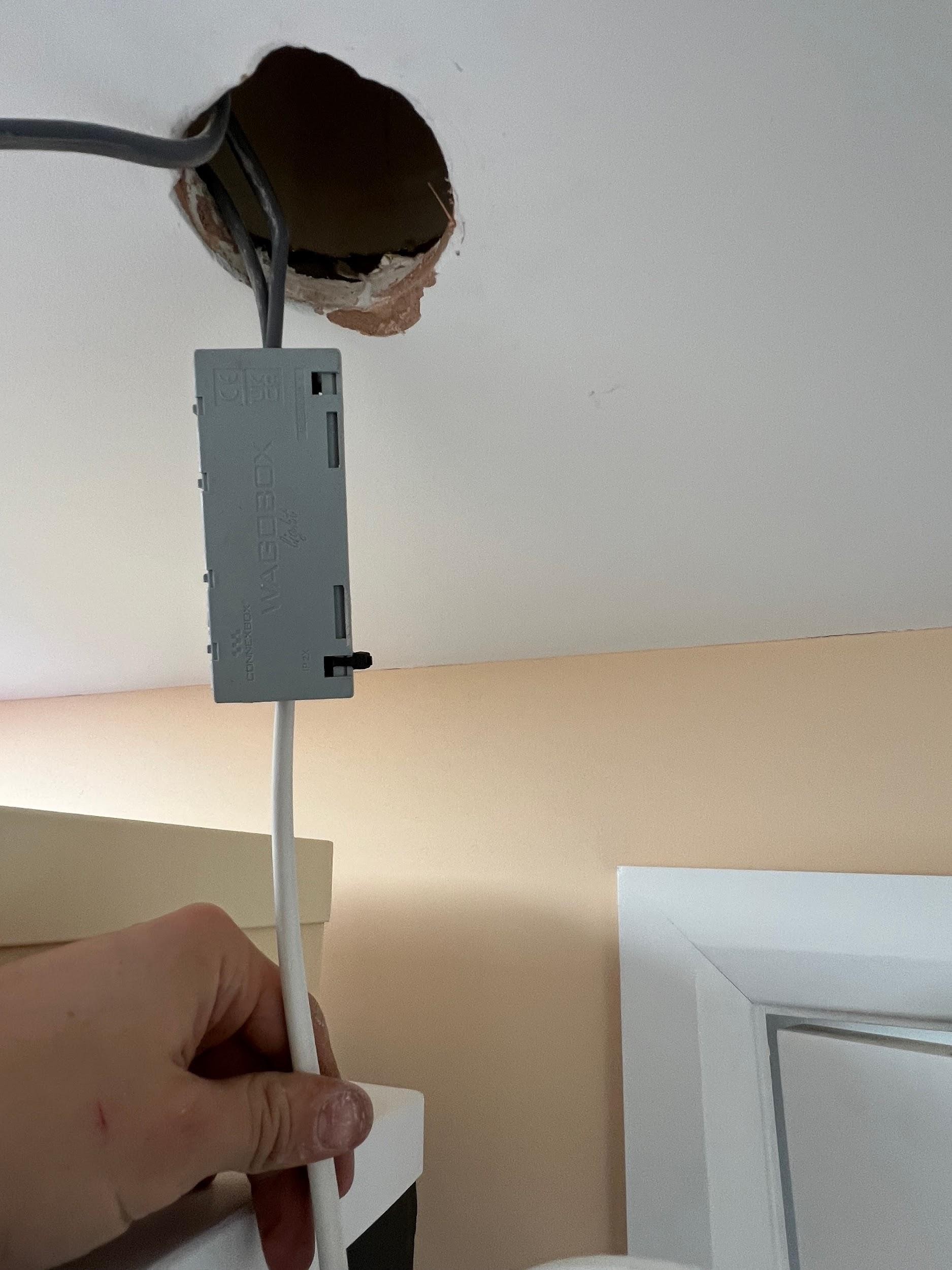
An Electrical Installation Condition Report (EICR) is a formal safety check of the fixed electrical installation in a property — the consumer unit, wiring, sockets, switches and fittings. It’s a report on condition, not a certificate of new work, and it tells you whether an installation is safe to keep using, what needs fixing, and how urgently.
Below is a straightforward Q&A covering what we do, how long it takes, and how the results are coded — with real examples.
It assesses the installation against the current edition of the wiring regulations (BS 7671), looking for damage, deterioration, defects, and anything that doesn't meet modern safety standards — regardless of the property's age.
We test things like earthing and bonding, circuit protection (RCDs/breakers), insulation resistance, and physical condition of accessories and the consumer unit.
An EIC is issued for new work (a new circuit, rewire, or consumer unit change).
An EICR is for existing installations already in service, usually done periodically or when a property changes hands or use.
A qualified, registered electrician (e.g. NICEIC, NAPIT) with the training and test equipment to inspect and test safely without damaging the installation.
No — every circuit is individually tested (continuity, insulation resistance, polarity, earth fault loop impedance, RCD operation) as well as visually inspected.
As a rule of thumb, we allow around 30 minutes per circuit for a thorough job.
So:
We test things like earthing and bonding, circuit protection (RCDs/breakers), insulation resistance, and physical condition of accessories and the consumer unit.
Yes — more circuits (or more sub-mains, outbuildings, extensions) means more test time.
Restricted access, hard-to-reach cabling, or a poorly labelled board can add time too.
It can be rushed, but that's how genuine defects get missed.
Anyone quoting a fraction of this time for a full installation should be asked exactly what testing they're actually carrying out.
Every observation on the report is given a classification code.
This is where Best Practice Guide 4 — published by Electrical Safety First (formerly the Electrical Safety Council) — is the industry reference. It gives standardised examples so different electricians code the same fault consistently.
Reference: Electrical Safety First – Best Practice Guide 4: Electrical Installation Condition Reporting
We test things like earthing and bonding, circuit protection (RCDs/breakers), insulation resistance, and physical condition of accessories and the consumer unit.
Risk of injury right now. Immediate action required — the electrician should act on the spot to remove the danger where possible.
Example:
Live conductors exposed at a broken socket faceplate, or a damaged consumer unit with exposed live parts within reach.
Not an immediate danger, but could become one. Urgent remedial action is recommended.
Example:
No RCD protection on socket circuits in a location where one is now required, or evidence of overheating at a connection.
Doesn't present danger but doesn't meet current standards.
It's advisory — the installation can still be marked satisfactory, but improving it enhances safety.
Example:
No circuit list/labelling on the consumer unit, or an older-style board with no RCD protection at all where none is currently mandatory but would be beneficial.
Example:
No RCD protection on socket circuits in a location where one is now required, or evidence of overheating at a connection.
Something couldn't be fully verified without more invasive work.
Example:
A circuit that can't be traced or identified from the board, or a reading outside expected parameters that needs deeper investigation to diagnose.
Yes — if any observation is coded C1 or C2, the overall assessment is "Unsatisfactory," and it would be unreasonable for the report to say otherwise.
C3s alone don't fail a report but should still be considered.
Test results are checked and the report is written up.
A senior/qualified supervisor reviews the report before issue — this is the QS office admin step, ensuring codes are applied correctly and consistently.
You receive the EICR along with the Schedule of Inspections and Schedule of Circuit Details/Test Results — the report isn't valid without these.
Any C1s are usually addressed immediately; C2s should be actioned urgently; C3s and FIs are discussed and prioritised with you.
This page is for general information. For a quote or to book an EICR, [contact us].
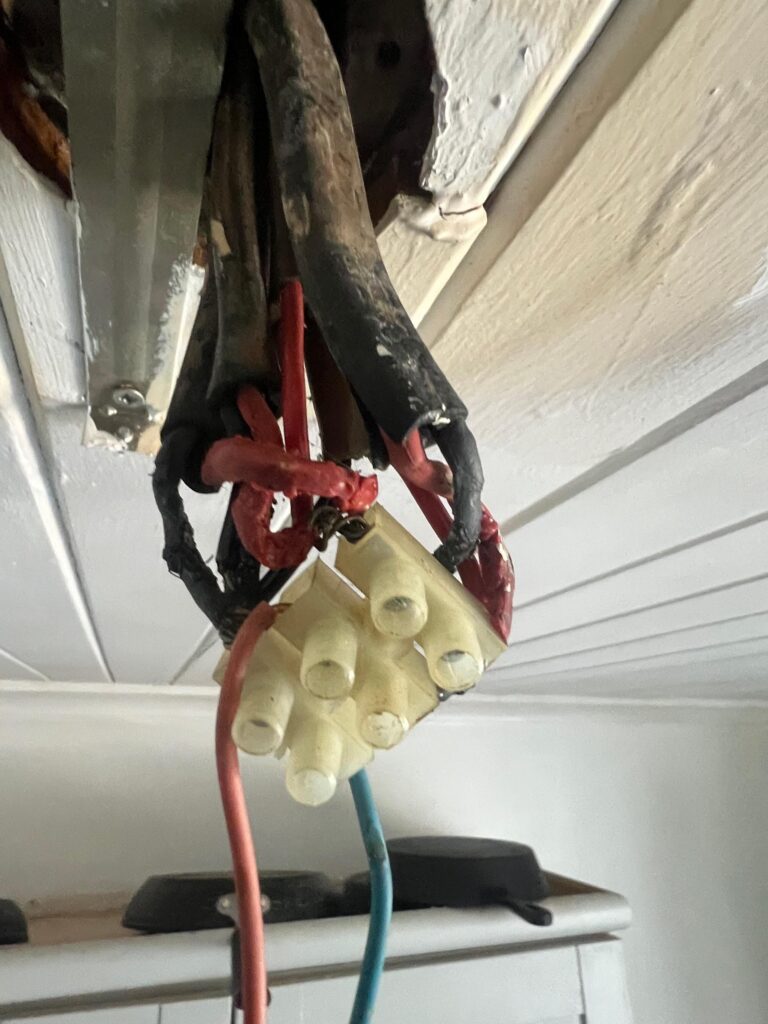
If the report comes back unsatisfactory, we’ll give you a clear, itemised quote for the
remedial work, carry it out promptly, and issue the relevant certification once it’s resolved